Showing posts with label PR STATEHOOD. Show all posts

Friday, March 20, 2015

PUERTO RICO'S MUNICIPALITIES NEED TO FIND A SOLUTION FOR THEIR DISTRESSING FINANCIAL COLLAPSE.


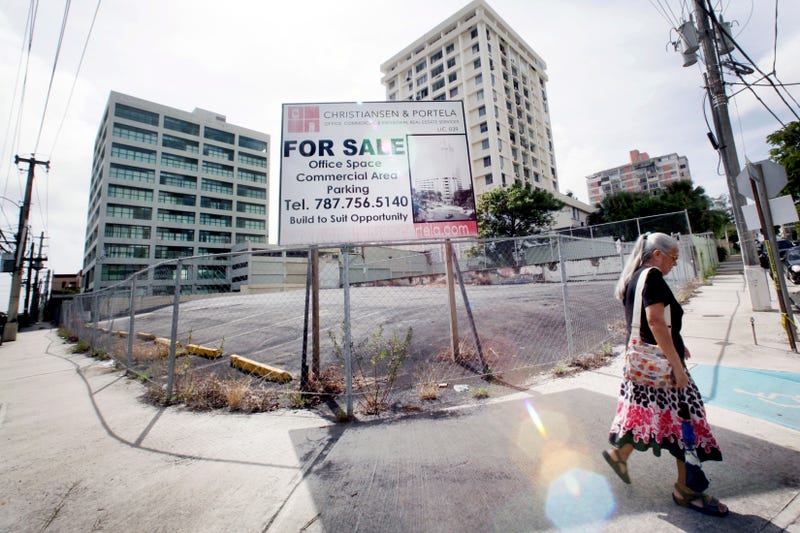
It's not only the Puerto Rico Tax payers who are hurting since Law 22 was passed by the last local Administration, which allows zillionaires to move to Puerto Rico and not pay taxes. It's also the cities & towns who cannot face the financial distress and are contemplating to file for bankruptcy.


Some of the reasons for this are:
  • The lack of foresight, the lack of proper and effective government administrations,  the rampant corruption at government and public level, 
  • The greediness of local investors in collusion with politicians to become richer and richer at the expense but without benefit to the people, 
  • The inefficiency and disdain of the gubernamental apparatus to address the situation properly so as not to go against the ruling oligarchy, 
  • Last but not Least: The indifference of the United States Government who tries to project to the world that they are leaders of the world in civil and human rights while keeping Puerto Rico a colony without us being able to vote for the most basic of all democratic rights, becoming a State of the Union, and being able to vote for the President and others who make decisions that affect our lives and futures.
All this and more has resulted in a total financial, emotional and social collapse of Puerto Rico and its municipalities, and of millions of United States Citizens who are also called Puerto Ricans. 

Puerto Rico's Municipalities cannot continue to rely on the central government to resolve this situation. They must stand up for their people and find sources of revenues which the State or Federal Government are not able or do not want to provide for them.
Miriam J. Ramirez MD
_________________________________________

Puerto Rico Faces Fiscal Distress in Cities

by MARC D. JOFFE
THE BOND BUYER
MAR 18, 2015 
A preliminary review of recently released audited financial statement data reveals widespread financial distress among Puerto Rico’s 78 municipalities. Several of these local governments may require extraordinary financial assistance from the Commonwealth, raising the possibility that a significant portion of Puerto Rico’s $4 billion in municipal debt could become a concern for holders of Puerto Rico general obligation bonds. Another possibility is that several of the municipalities will file for bankruptcy protection should Congress choose to extend the Chapter 9 option to Puerto Rican entities.

The financial data was obtained by Centro de Investigación y Política Pública (CIPP), a Puerto Rico-based not-for-profit that operates the government transparency site ABRE Puerto Rico (Open Puerto Rico). The financial statements as well as summary statistics will be posted on ABRE Puerto Rico by late April. We have been able to examine some of the data ahead of this release, and are sharing some key findings in this note.

Puerto Rico municipalities file audited financial statements with the federal and Commonwealth governments. Any U.S. local government that receives at least $500,000 in federal funds is required to file a single audit each year. It appears that all 78 Puerto Rican municipalities – including those with less than 10,000 in population – meet the filing threshold. The reports are in English, are presented in accordance with GASB standards, and contain opinions from third party auditors. In most cases, CIPP was able to obtain filings for the fiscal year ended June 30, 2013; but in some cases 2012 filings were the latest available.

According to summary data obtained by CIPP and spot-checked by this author, more than half of Puerto Rico municipalities have negative general fund balances. Few cities meet the GFOA recommendation for fund balance, i.e. enough to cover two months of spending. The Commonwealth’s largest city, San Juan, reported a positive general fund balance of $11 million – just over 2% of annual expenditures – but none of this money is available for discretionary spending. After subtracting the $110 million in Nonspendable and Restricted General Fund balances, San Juan is left with an Assigned and Unassigned General Fund balance of negative $99 million.

A majority of cities also experienced general fund deficits in fiscal 2013, digging themselves deeper into insolvency. For example, San Juan recorded general fund revenues of $420 million versus expenditures of $470 million. Ponce, the territory’s fourth largest city, has run substantial deficits during each fiscal year since 2008, accumulating a negative general fund balance of $36 million. This level of accumulated general fund deficits is comparable to that reported by San Bernardino in the wake of its 2012 bankruptcy filing.

Not all Puerto Rico cities are experiencing fiscal distress. Carolina, the third largest city, reported a roughly balanced budget in 2013 and significant unrestricted general fund reserves. Bayamon, the number two city, had a 2013 surplus and a positive assigned/unassigned general fund balance but reported a negative unrestricted net position on its government-wide statement of net position.

Some smaller municipalities reported alarming results, and perhaps should have received “going concern” audit opinions. One example is Maunabo, a 12,000-resident municipality on Puerto Rico’s southeast coast. As of June 30, 2012, the municipality had a general fund balance of negative $2.9 million. That worsened to negative $3.5 million as of June 30, 2013. (One of the towns which suffered most when the Navy left Puerto Rico. MJ)

Most of the Maunabo’s revenue comes from the Commonwealth or Federal government. In fiscal 2013, the city had total revenues of $14.4 million of which $11.2 million took the form of intergovernmental grants and subsidies. Since the community lacks the ability to support the level of service provided by the local government, spending cuts at either the federal or Commonwealth level could be devastating.

The auditor found problems with how Maunabo accounts for its USDA Community Development Block Grants, which, at $1.7 million, is the largest federal grant it receives. The most serious finding was that “the Program did not maintain accurate accounting records of the financial transactions and did not reconcile, the cash account with the quarterly reports submitted to the pass-through-entity (which is OCAM – the Office of Commissioner of Municipal Affairs).”

The auditor also gave a qualified opinion of Maunabo’s financial statements because the city does not have “complete, updated and accurate records of [it’s] capital assets.” Footnotes to the financial statements reveal that the city has overdrafts in its bank accounts and that it has missed $400,000 in interest and principal payments on a 2006 Department of Housing and Urban Development loan. These defaults have been covered by OCAM.

Several other small municipalities had audit exceptions, negative general fund balances and/or a majority of revenues from intergovernmental sources. Unless Puerto Rico experiences an unexpected turnaround, these municipalities will be unable to service their substantial debts without extraordinary assistance from higher levels of government.


MORE: http://www.bondbuyer.com/news/commentary/puerto-rico-faces-fiscal-distress-in-cities-1071461-1.html
Marc D. Joffe is principal consultant at Public Sector Credit Solution

Saturday, October 26, 2013

Puerto Rico's Debt Crisis: Puerto Pobre


Oct 25, 2012 - THE ECONOMIST
puerto rico

Puerto Rico carries outsized importance in America’s almost $4 trillion municipal-debt market, which includes bonds issued by states and other local authorities as well as by cities. The island’s current debt, between $52 billion and $70 billion (depending on how it is measured), is the third-largest behind California’s and New York’s, despite a far smaller and poorer population. In America’s 50 states the average ratio of state debt to personal income is 3.4%. Moody’s, a ratings agency, puts Puerto Rico’s tax-supported debt at an eye-watering 89% (see chart).

Puerto Rico’s debt has long been a staple of American municipal-bond funds because of its high yields and its exemption from federal and local taxes--of particular appeal to investors in high-tax states. That let Puerto Rico keep borrowing despite its shaky economic and financial condition, until Detroit’s bankruptcy in July alerted investors to the threat of default by other governments in similar penury.

America won control of Puerto Rico in the Spanish-American war of 1898. Its people have American citizenship and receive American government pensions, but pay no federal tax on their local income.

The economy has big structural problems. Participation in the labour force, at 41%, is 
some 20 percentage points below America’s. The island has the federal minimum wage, even though local productivity and incomes are far lower than in the rest of America, creating a strong disincentive to hire. Inflated benefit payments, for disability for instance, discourage work. Moody’s Analytics reckons the territory’s bloated public sector accounts for 20% of employment, compared with 3.7% for the average state (though it provides some services that the federal government would on the mainland). Growth and investment are hampered by bureaucracy, stunted infrastructure and crime.
Shrinking, sinking

Puerto Rico has been in recession virtually since 2006, when a federal tax break for corporate income expired, prompting many businesses to leave. As Puerto Ricans with prospects emigrate, the remaining population has aged and shrunk. The government has run budget deficits (prohibited for states) for the past decade, averaging 2.5% of GDP from 2009 to 2012. Its pension fund is only 7% funded, which is abysmal even by the standards of other American states and territories.

The current administration has sought to shore up its finances by increasing taxes by $1.1 billion (about 1% of GDP) and raising the retirement age for government employees, as well as the share of their salaries they contribute to their pensions. It has promised to wipe out its budget deficit, projected at $820m this fiscal year, by 2016.

Such austerity could further hobble growth, making it harder to shrink debt ratios. Luis Fortuño, the previous governor, lost his job last year partly because of public anger at the cuts he oversaw. Like Greece in the euro zone, Puerto Rico has no control over monetary policy (the preserve of the Federal Reserve), and so cannot mitigate a fiscal tightening with lower interest rates or a cheaper currency.

Investors meanwhile are so wary, after years of missed deficit targets, tardy financial reports and accounts opaquer than those of other states, that Puerto Rico has had to cut back on new bond issues. It is filling the gap with more short–term bank loans; but they come at punitive rates of interest and must be rolled over more often.

Investors are now openly debating whether Puerto Rico will default. Its constitution requires that its general-obligation bonds ($10.6 billion of the total) get first claim on tax revenues. Other bonds are backed by dedicated revenue such as sales tax and power bills and by a law authorising the government to pay interest ahead of other claims. "Honouring debts is not only a constitutional but also a moral obligation," Alejandro Padilla, the governor, told investors earlier this month.

Yet politically it may be tough to gratify bondholders if police, doctors and teachers go unpaid. The federal government cannot be counted on for a bail-out: fiscal hawks in Congress would almost certainly balk at the expense and the precedent.
Should Puerto Rico seek to restructure its debts, it would be entering uncharted legal terrain. Unlike a city it cannot declare bankruptcy. It does not enjoy the same sovereignty the constitution grants the states; should it try to renege on its debts, Congress might intervene. Years of litigation would follow.
Puerto Rico’s problems have not yet had much effect beyond its shores. Its debt is held mainly by mutual funds and individuals, although in recent months many have sold to distressed-debt specialists. Some brokers have stopped selling its bonds to their clients. Borrowing costs have risen for a few highly indebted states such as Illinois, but the majority have no trouble selling bonds, says Chris Mier of Loop Capital Markets, which specialises in municipal debt. Happily, state finances are much healthier today than in 2010. But complacency would not be wise. No state has defaulted since 1933. A default by Puerto Rico could come as a wake-up call.


ALTHOUGH investors are now less jittery about a possible default by the American Treasury, they are rightly still nervous about a drama unfolding in the market for state and local debt. Since May, yields on bonds issued by Puerto Rico, a self-governing American territory, have shot up to between 8% and 10%, despite their (barely) investment-grade 


Tuesday, August 6, 2013

Congratulations Governor... I wish you were as effective getting us GOP support for HR 2000

(WOW ! Fortuno continua teniendo logros profesionales y personales con los Republicanos en EEUU, ..... pero, y para Puerto Rico que? ..y por que no usa esas relaciones para conseguir respaldo para el proyecto H.R.2000 de Pierluisi? mj)
By CB Online Staff


Former Puerto Rico Gov. Luis Fortuño has been named to board of advisors at Media Group of America, LLC, a Republican-led company launched in the wake of the GOP’s disappointing showing in the 2012 elections in the U.S.

Since leaving office after one term in January, Fortuño has been serving as a partner in the Washington, D.C. office of the Steptoe and Johnson, an international law firm with offices in Beijing, Brussels, Century City, Chicago, London, Los Angeles, New York and Phoenix.

Fortuño, who works out of the law firm’s Washington office, practices in the corporate, securities, and finance group and the government affairs and public policy group. He is also continuing the expansion of Steptoe’s Latin American practice.

Fortuño, who headed the island’s statehood New Progressive Party and is a member of the national Republican Party, narrowly lost his bid for a second term as governor last November. He continues to serve as the Republican National Committeeman for Puerto Rico. (Como??? si ya no vive en PR!!)

Under his leadership, Puerto Rico downsized its bloated government, reined in deficit spending and implemented the biggest tax cut in the island’s history. He is also credited on Wall Street with keeping Puerto Rico’s credit rating from sinking to junk level.

Steptoe was contracted by the government during Fortuño’s tenure to design the Law 154 tax strategy, which levied an excise tax on multinational firms operating on the island and provided the financing for the tax reform, the former governor’s signature achievement while in office.

Fortuño’s signature public-private partnerships law paved the way for two of the largest recent infrastructure investment projects in the Americas — one in Puerto Rico’s highway system and the other at its hub airport.

While governor, Fortuño served as president of the Council of State Governments (2011-2012) and as chairman of the Southern Governors Association (2011-2012). He also served on the board of directors of the Center for Best Practices of the National Governors Association (2010-2012) and was appointed by President Obama to be one of ten governors serving in the Council of Governors (2010-2012).

Prior to his election to La Fortaleza, Fortuño served four years as resident commissioner in Congress, the island’s sole representative on Capitol Hill. During that time, he served as vice-chair, and then chair of the Congressional Hispanic Conference. He also was co-chair of the Congressional Friends of Spain, part of the Hispanic Conference Caucus.

Earlier in his public service career, he served as Puerto Rico’s Economic Development & Commerce secretary during the Rosselló administration, and simultaneously as executive director of the Puerto Rico Tourism Co. and president of the Hotel Development Corp.

In private practice in Puerto Rico, Fortuño was a partner in the McConnell Valdés law firm, and later a founding partner of the boutique firm Correa, Collazo, Herrero, Jiménez & Fortuño. He has represented Fortune 500 companies in regulatory, financial, real estate, mergers and acquisitions, and other corporate matters throughout Latin America.

Fortuño earned his juris doctor from the University of Virginia and his bachelor’s degree from Georgetown University’s School of Foreign Service. He is admitted to the practice of law in the District of Columbia and Puerto Rico, and is a member of the American Law Institute.

Formed in March 2013, MGA Holdings houses three core businesses that collectively address challenges and opportunities evident in the aftermath of the 2012 electoral campaign.

Friday, June 14, 2013

THE SMITHSONIAN WAS READY... THE PNP* WAS NOT...

THE SMITHSONIAN

June 14, 2013 11:00 am

AN 51st Star on the U.S. Flag?

Exactly 236 years ago today the United States Congress signed the resolution that made the familiar stars and stripes the official American flag. That early flag looked quite different than the one we know today of course, with only 13 stars rather than 50. It wasn’t until August 21, 1959, when Hawaii officially joined as the 50th state of the United States of America, that we finally got those alternating rows of stars. But let’s say that the U.S. does pick up a new state—maybe one of the current unincorporated territories like Guam or American Samoa or Puerto Rico—as an official state. Where do you put that new 51st star? Sure, you could just tack it on the side. But who really wants an awkwardly asymmetric flag?

Well, one way to do it is to crowd source the design. When Puerto Rico voted for statehood, the internet was ready. Smithsonian’s Design Decoded covered the new designs

Read more: http://blogs.smithsonianmag.com/smartnews/2013/06/where-would-you-put-a-51st-star-on-the-u-s-flag/#ixzz2WEiWcq7a
Follow us: @SmithsonianMag on Twitter

* NEW PROGRESSIVE PARTY 

Wednesday, April 10, 2013

MR. PIERLUISI, I STAND TO CORRECT YOU!! ON Nov.06, THE MAJORITY OF AMERICAN CITIZENS IN PUERTO RICO VOTED IN FAVOR OF STATEHOOD!!

MR. PIERLUISI, YOU NEED TO INTRODUCE AN ADMISSION ACT.mj
A historic day for Puerto Rico, says Pierluisi
The last one was not enough: Puerto Rico’s Resident Commissioner Pedro Pierluisi says another plebiscite is coming for Puerto Rico.
Shortly after the White House released the 2014 budget, Pierluisi—Puerto Rico’s sole representative in Congress, and who is for statehood—announced that it includes the allotment of $2.5 million to go towards a new plebiscite to vote on the island’s territorial status.
“Today is a historic day for all of us that fight for equality and justice for Puerto Rico,” Pierluisi said in a statement. “The White House recognizes that in Nov. 06 the majority of American citizens in Puerto Rico revoked their consent to continue with the current territorial status because it denies the residents of Puerto Rico fundamental rights of democracy.” 


A similar plebiscite took place just last November, and the option of statehood won. However, some have brought the result into question.
While the option of statehood won with 834,191 votes, almost half a million voters—498,604, to be precise—left that question blank. That seemed to be in line with what the Popular Democratic Party (PPD)—which opposes statehood—had asked their followers to do, to protest the plebiscite. On top of those 498,604 blank ballots, 454,768 voted for Puerto Rico to become a sovereign free state, while 74,895 voters went for independence.
Read more: http://www.voxxi.com/obama-new-plebiscite-status-puerto-rico/#ixzz2Q6oKCjCk

Monday, March 18, 2013

LLEGO EL MOMENTO DE LA VERDADERA DEFINICION!

Atentos ESTADISTAS....Estamos presenciando un momento histórico y trascendental en el logro de la Estadidad!!! 

Busquen lapiz y papel y apunten ahora mismo !! Apunten los nombres de los lideres que no respaldan la 933A. ESOS SON LOS VERDADEROS ESTADISTAS.
En la otra lista apunten los que respaldan la 933A. ESOS NO SON VERDADEROS ESTADISTAS!!  Bravo para Jenniffer y Tommy !!!


Y les digo que hagan la lista ahora, pues los de la segunda lista van a tratar de saltar a la primera por conveniencia personal, cuando vean lo que viene. Ooops para Larry Seilhamer

Esos de la segunda lista, los PRO-933A,  no pueden ser re-electos en el 2016. No nos conviene tenerlos en posiciones de liderato para negociar con el Congreso nuestra admisión como el Estado 51. No sabemos a quien responden!
Adelante hermanos y hermanas!! ..como dijo un personaje quijotesco: 
"Dejad que los perros ladren, es señal que vamos avanzando"! mj
***********************************
Truenan contra la 933-A
EL VOCERO
18 de marzo de 2013

Expresidentes legislativos le salen al paso a la propuesta del Comisionado Residente

Tanto el expresidente del Senado, Thomas Rivera Schatz, como la expresidenta de la Cámara, Jenniffer González, coincidieron en que el País no debe apostar a la creación de nuevos incentivos federales para desarrollar la economía y crear empleos.

La postura de ambos líderes estadistas contrasta con la del comisionado residente, Pedro Pierluisi, quien el viernes pasado se reunió con el gobernador Alejandro García Padilla para aunar esfuerzos y conseguir la aprobación de la Sección 933-A en el Código de Rentas Internas federal y lograr que se exima a Puerto Rico de la Ley de Cabotaje, entre otros asuntos.

La Sección 933-A otorgaría el beneficio de operar como una compañía doméstica a toda empresa incorporada en Puerto Rico y que genere al menos un 50 por ciento de sus ingresos en la Isla.

Rivera Shatz, dijo que “ese discurso de 933-A y de enmiendas a la Ley de Cabotaje es una defensa pobre de la estadidad, es doblar rodillas”. Recomendó entonces “reclamarle al Gobernador y al Gobierno federal que Puerto Rico votó el 6 de noviembre por el fin de la colonia y para ser incluido como un estado”.BRAVO TOMMY !

“El mantengo corporativo no adelanta la causa estadista, por el contrario y sencillamente, yo me opongo. Estoy en contra de seguirle poniendo remiendos a la colonia porque no son otra cosa que una defensa vaga de la estadidad”, sentenció Rivera Schatz.

En tanto, González, ahora portavoz del Partido Nuevo Progresista (PNP) en la Cámara, se opuso a la Sección 933-A y también a la Ley de Cabotaje, asuntos que “no se han discutido en el seno directorio”, aunque el presidente del PNP las promueve junto al Primer Ejecutivo. “No creo que sea el modelo económico que Puerto Rico tiene que empujar. Creo que la experiencia en el pasado de estas cosas que se permiten en el Código de Rentas Internas federal no vienen a acrecentar lo que debe ser la solidificación económica de Puerto Rico”, apuntó la también Vicepresidenta de la Palma. BRAVO JENNIFFER !

Mientras, el portavoz del PNP en el Senado, Larry Seilhamer, ve con buenos ojos que se busque el apoyo del Ejecutivo y la mayoría legislativa para eliminar la Ley de Cabotaje e impulsar enmiendas al Código de Rentas Internas federal. Booooooooooh! Seria por eso que lo nombraron ahi?

Sobre estas propuestas, Aníbal Meléndez, vicepresidente del PNP, dijo que “hay que evaluar todo porque la época y los momentos cambian. Hay crisis en el País y las familias están sufriendo”. Se intentó obtener una reacción del doctor Ricardo Rosselló Nevares pero no se obtuvo respuesta.

Para esta semana informe GAO

El comisionado residente, Pedro Pierluisi, adelantó que aunque su equipo examina todavía el informe de la Contraloría General de Estados Unidos (GAO, por sus siglas en inglés), el documento “podrá dar pie a que radique uno o más proyectos de ley ante el Congreso”. 

Y EL  DE ESTADIDAD ? HUH? 

Los proyectos buscarían que “se exima a Puerto Rico de la aplicación de la Ley de Cabotaje en áreas específicas como la transportación de combustible y de carga a granel”. Se espera que a mediados de esta semana se divulguen los detalles del informe, indicó Pierluisi a EL VOCERO en una comunicación escrita.

Obed Betancourt colaboró en este reportaje

Friday, March 1, 2013

One-Way Tickets To Florida: - Puerto Ricans Escape Island Woes


by Greg Allen
Feb 5, 2013 (Morning Edition) —
Life in Puerto Rico is tougher than ever. The U.S. territory -- popularly known as "the island of enchantment" -- faces a decaying economy and escalating violent crime rate. Many residents are leaving the island in record numbers and embracing the mainland as home.

Puerto Rico's population is dropping. Faced with a deteriorating economy, increased poverty and a swelling crime rate, many citizens are fleeing the island for the U.S. mainland. In a four-part series, Morning Edition explores this phenomenon, and how Puerto Rico's troubles are affecting its people and other Americans in unexpected ways.

According to the most recent census, the 4.6 million Puerto Ricans living on the U.S. mainland now surpass those on the island of Puerto Rico. For years, they've been migrating out of the U.S. Caribbean territory — many to escape the escalating crime rate and economic crisis.

Today, Florida replaces New York as the primary destination for Puerto Ricans coming to the U.S. In Osceola County, Fla., the population has tripled over the past two decades largely because of the migration. It's one of the nation's fastest growing areas, and about half of the population is Hispanic — most of them Puerto Rican.
Bringing Puerto Rico To Florida
In Kissimmee, south of Orlando, many of the signs are in Spanish, and some businesses resemble what you might find in a city like San Juan. One of those businesses is Miguel Fontanez's restaurant, Pioco's Chicken. It's a spot that was started by his father, also named Miguel.

The elder Fontanez owned a chain of successful restaurants in Puerto Rico. But in 1996, he brought his family to Central Florida after his brother, a police officer, was killed. "It was very bad; it was very tough," Fontanez says. "So [my father] just wanted to move somewhere fresh and start something different. And my grandmother at that time was living already here. So the first place that came to mind was Florida."

A number of Puerto Rican colleges and universities have opened campuses in Central Florida, offering bilingual education to the area's fast-growing Hispanic population.

After moving to Central Florida with her daughter, Arlnene Bonet says finding a job wasn't easy. But now that she has one, she's grown to love the area and has no plans to return.

"It's pretty much like a Caribbean island because it's sunny, it's fresh, it's beautiful," she explains. "So we feel like it's home." While the move was hard on her daughter, Bonet says it was crucial — both for her future and her eventual grandchildren.

"That's one of the reasons also I moved," Bonet says. "It's not just thinking about me. What kind of life can I give my grandchildren in the future if Puerto Rico, instead of going up, is going down?"

Copyright 2013 NPR.  
READ FULL ARTICLE AT: http://www.npr.org/.- See more at: http://www.northcountrypublicradio.org/news/npr/171061350/one-way-tickets-to-florida-puerto-ricans-escape-island-woes#sthash.xmqB43bu.dpuf

Monday, February 18, 2013

Pharmaceutical Industry Association of PR


US Citizens in the US Territory of Puerto Rico !!! 
GUESS WHAT ?!
The Official Web Site of the Pharmaceutical Industry Association of PR, says we have 4 elected officials in the US Congress !
WHAT ! ....Really? 
I didn't know that !!! Did you know that ?
Gee whiz! ...and here we have been complaining we do not have Congressional representation and the Puerto Rico Pharmaceutical Industry says we do!

No one ever told us! I wonder what else they don't tell us about who is our real government and what is happening in the US Congress with Puerto Rico's generous offshore  CFC's Tax Shelter!
AM I MISSING SOMETHING HERE?
Call or write to the PIA and let them know your thoughts on this.

Pharmaceutical Industry Association of Puerto Rico
Parkside Plaza
14 Calle 2 Suite 350 
Guaynabo, PR 00968-1720
Tel. (787).622.0500 Fax (787).622.0503


Click on the link below and search around... Let's find out more things they know and we don't know about our island, Puerto Rico, USA! 
MORE:
http://www.piapr.org/index.php?submenu=Elected&src=gendocs&ref=ElectedOfficials&category=PRFacts

Thursday, February 14, 2013

OECD Calls for Curbs on Tax Avoidance by Multinationals

OECD Calls for Curbs on Tax Avoidance by Multinationals: "The Organization for Economic Cooperation and Development is pointing to wide disparities in the low tax rates paid by many multinational corporations compared to the taxes paid by individuals and small businesses."

A new OECD study commissioned by the G-20, "Addressing Base Erosion and Profit Shifting", finds that some multinationals use strategies that allow them to pay corporate taxes as low as 5 percent, while smaller businesses are forced to pay up to 30 percent.

The study, which was released Tuesday, comes amid growing outcry in Europe over the low taxes paid by multinational corporations such as Amazon, Google and Starbucks, many of which are based in the U.S.

OECD research also shows that some small jurisdictions act as tax haven conduits, receiving disproportionately large amounts of foreign direct investment compared to large industrialized countries and investing disproportionately large amounts in major developed and emerging economies.

“These strategies, though technically legal, erode the tax base of many countries and threaten the stability of the international tax system,” said OECD Secretary-General Angel Gurría in a statement. “As governments and their citizens are struggling to make ends meet, it is critical that all tax payers - private and corporate - pay their fair amount of taxes and trust the international tax system is transparent. This report is an important step towards ensuring that global tax rules are equitable, and responds to the call that the G-20 has made for the OECD to help provide solutions to the global economic crisis.”

In his State of the Union address on Tuesday evening, President Obama also called for higher taxes on corporations to help mitigate the deep spending cuts required by the upcoming budget sequester, which would require cuts to programs that help senior citizens and school children (see Obama Pushes for Tax Reform in State of the Union). “Why would we choose to make deeper cuts to education and Medicare just to protect special interest tax breaks?” he asked. “How is that fair? Why is it that deficit reduction is a big emergency justifying making cuts in Social Security benefits but not closing some loopholes? How does that promote growth? Now is our best chance for bipartisan, comprehensive tax reform that encourages job creation and helps bring down the deficit.”

On Monday, a pair of Senate Democrats, Carl Levin, D-Mich., and Sheldon Whitehouse, D-R.I., introduced legislation designed to reduce tax breaks that benefit multinational corporations, such as setting up shell companies in foreign tax havens (see Senate Democrats Introduce Legislation to Eliminate Corporate Tax 'Loopholes').

Many of the existing rules that protect multinational corporations from paying double taxation too often allow them to pay no taxes at all, the OECD study pointed out. These rules do not properly reflect today’s economic integration across borders, the value of intellectual property or new communications technologies, according to the OECD.

These gaps enable multinational companies to eliminate or reduce their taxation on income, giving them an unfair competitive advantage over smaller businesses. The disparities also hurt investment, growth and employment and can leave average citizens footing a larger chunk of the tax bill, according to the OECD research.

The practices used by multinational enterprises to reduce their tax liabilities have become more aggressive over the past decade, the study pointed out. Some, based in high-tax regimes, create numerous off-shore subsidiaries or shell companies, each time taking advantage of the tax breaks allowed in that jurisdiction. They also claim expenses and losses in high-tax countries and declare profits in jurisdictions with a low or no tax rate.

The OECD report does not recommend any specific optimal tax rates for corporations, as each government must decides its own tax rates. In the coming months, however, the OECD plans to draw up an action plan, developed in co-operation with governments and the business community, which will further quantify the corporate taxes lost and provide concrete timelines and methodologies for solutions to reinforce the integrity of the global tax system.

Thursday, January 31, 2013

Justice Sotomayor’s Position on Statehood


THE PUERTO RICO REPORT
Supreme Court Justice Sonia Sotomayor has long been a source of pride for Puerto Ricans, and when President Obama nominated her to the Supreme Court in 2009, many celebrated that her nomination provided renewed interest in the discussion over Puerto Rico’s status.   Although Justice Sotomayor has avoided locking herself into any position on the issue, an analysis of her scholarly writing suggests that her opinion on Puerto Rico’s status has evolved from an emotional call for independence to a more thoughtful and pragmatic position of support for statehood.

Early in her academic career, Justice Sotomayor wrote her senior thesis on the former Puerto Rican governor who gave the island its “commonwealth” label.  Justice Sotomayor demonstrated her pride in her Puerto Rican heritage, dedicating the paper “to the people of my island – for the rich history that is mine.”  The paper  also describes the ways in which the U.S. presented itself as liberating Puerto Rico from Spain and its subsequent struggle to define Puerto Rico’s status.  At the time, the options for Puerto Rico’s political status ranged from statehood to limited autonomy to independence.  Notably, Justice Sotomayor acknowledged that she had a “bias toward independence for Puerto Rico.”

Since then, however, Justice Sotomayor’s views have changed, in part because of the influence of her early mentor, Judge Jose Cabranes, who is also Puerto Rican.  The two met while Justice Sotomayor was attending Yale law school.  While she began her undergraduate education as a strong proponent for Puerto Rican independence, Judge Cabranes impacted her views about being an American and  Puerto Rican, and further thought led to her adopt what has been called “a more flexible stance” on Puerto Rico’s status.

This more open-minded stance is demonstrated Justice Sotomayor’s student note published in the 1979 Yale Law Review, in which she advocates for certain rights for Puerto Rico to protect the island’s economy upon its becoming a state.  Justice Sotomayor pragmatically explains that statehood is the “foremost alternative” to alleviating the island’s economic difficulties and dissatisfaction with the current “commonwealth” arrangement.  She also acknowledges that “a bid for statehood by Puerto Rico has increasingly been viewed as inevitable.”  Given the inevitability of Puerto Rico’s pursuit for statehood, Justice Sotomayor’s note analyzes the conditions under which Puerto Ricans should accept statehood, and she argues that the United States should cede Puerto Rico its seabed rights when admitting the island into the union.

Taken together, Justice Sotomayor’s two papers reflect a great deal of thought and the dedication of tremendous emotional energy to the issue of Puerto Rico’s political status. Ultimatelyfocusing on the interests of Puerto Rico and its people, she concludes that the most logical choice for Puerto Rico is statehood.
MORE: 
http://www.puertoricoreport.org/wp-content/uploads/2012/11/Sotomayor-Student-Note.pdf

http://www.puertoricoreport.org/category/people/

PUERTO RICO STATEHOOD

I am proud to have  known President Reagan and President George H.W. Bush personally, and worked with them on the Puerto Rico Statehood Issue since the 80's. Those were the days....mj

Sen. Bob Menendez’s, who is against Puerto Rico Statehood, apparently is involved in a prostitution scandal with minors

FBI raids Florida eye clinic of donor linked to Sen. Bob Menendez’s prostitution scandal
THE DAILY CALLER

David Martosko
Executive Editor


FBI agents have raided the West Palm Beach, Fla. eye clinic owned by Dr. Salomon Melgen, the wealthy donor to New Jersey Democratic Sen. Bob Menendez who allegedly procured prostitutes for him — some of them as young as 16 — during trips to the Dominican Republic.

The Miami Herald reported that federal agents lined up vans outside the Melgen Eye Center late Tuesday night to haul away evidence in the case.


A woman answering the phone at Melgen’s home in West Palm Beach would not give her name but said, “Dr. Melgen is asleep.” Asked if he was aware his clinic was being raided by federal law enforcement, she replied, “Oh yes, well, these things happen all the time. They’ve got to do their job.” She declined to comment on Melgen’s relationship with Sen. Menendez.

Melgen, 59, is believed to have flown Menendez in his private jet to the Dominican Republic on several occasions for alcohol-fueled sex parties featuring prostitutes. (RELATED: Emails show FBI investigating Sen. Bob Menendez for sleeping with underage Dominican prostitutes)

According to the Miami Herald, records obtained from the Palm Beach County recorder show Melgen also “has an outstanding IRS lien of $11.1 million for taxes owed from 2006 to 2009.”

It’s unknown whether the FBI is investigating his tax delinquency, his association with Sen. Menendez, or both. A spokesman for the FBI in Miami, Fla. would only say that the Bureau was “conducting law enforcement activity in the general vicinity of 2521 Metrocentre Blvd, West Palm Beach, FL” — the address of Melgen’s flagship clinic.

Menendez is slated to take over as chairman of the powerful Senate foreign affairs committee when Massachusetts Democratic Sen. John Kerry becomes secretary of state. The full Senate confirmed Kerry’s nomination on Tuesday. But it’s unclear whether Senate Majority Leader Harry Reid will hand the committee’s gavel to Menendez without a full investigation into his conduct. Committee chairmen with jurisdiction over international matters typically have high-level security clearances. Menendez’s could be jeopardized if the allegations against him are proven true.

The Daily Caller first reported in November that two prostitutes had accused Menendez of paying them for sex during Easter weekend 2012 at a posh Dominican resort. Prostitution is legal in that country but viewed unfavorably by U.S. voters.

The women appeared in videotaped interviews with the help of a translator. Each said she was promised $500 to sleep with the New Jersey lawmaker, but was ultimately paid only $100. (Women say Sen. Bob Menendez paid them for sex in the Dominican Republic)


RELATED VIDEO:  INVESTIGATING SEN MENENDEZ FOR SLEEPING WITH UNDERAGE DOMINICAN PROSTITUTES

Additional confirmation came from a Dominican government official who told TheDC that Menendez frequents “sex, hookers and drinking” parties in the Caribbean nation.

On Jan. 25 TheDC followed up that reporting with new allegations contained in documents that a tipster placed online. Those files, published on a makeshift WordPress blog, have attracted nearly 20,000 online readers in the United States. Among other claims, the documents indicated that the FBI was actively investigating the matter, and that some of the prostitutes Menendez slept with were younger than 18.

The PROTECT Act of 2003 made it a federal crime to pay for sex with anyone that young, regardless of the age of consent in the country where the illicit transaction occurs.

TheDC’s most recent reporting also raised the question of whether Menendez broke Senate Ethics committee rules by accepting free travel from Melgen without seeking the committee’s approval or disclosing the value of the perks. On Monday afternoon, Menendez refused to address the substance of the allegations against him, telling TheDC only that he was “not going to respond to the fallacious allegations of your story.”

One day later, Senate Majority Leader Harry Reid took a swing at The Daily Caller for its reporting, telling assembled journalists Tuesday that “I always consider the source” of allegations, “and all anyone here has to look at is the source where this comes from. It’s — it’s a source that has brought up a lot of non-issues.” 

Friday, January 25, 2013

PRUEBA CONTUNDENTE !

O sea que Luis Fortuño ya tenia asegurado su trabajito con los Bufetes de las CFC's en Washington? Y ahora también lo van a poner a trabajar en Washington y hablar por TV a nombre de Puerto Rico? Que interesante!

Este articulo de Jose Delgado nombra los bufetes contratados por el gobierno PNP, que ademas fueron asesores del Gobierno PNP,  que son los mismos que representan a las CFC's (Corporaciones Foraneas), que son incompatibles con la Estadidad para Puerto Rico. 
(Ahora hay otros con el mismo fin pero con el PPD)

Este es el poder detrás de los gobiernos de Puerto Rico. Por eso tampoco hay oportunidad para ningún líder de pueblo llegar a gobernar a PR, si no se entrega totalmente a ese poder. Por eso sacaron a Rossello y a Santini de carrera. Pierluisi se salvo porque trabaja para ellos. MJ

LA BICI DE FORTUNO

Texto que aparece al pasar el mouse sobre la imagen
Noticias

Desde Washington

Jose Delgado
25 de enero 2013


Todavía en La Fortaleza, antes de terminar su mandato como Gobernador, Luis Fortuño barajaba ofertas de trabajo. Una era con el prestigioso bufete de Steptoe & Johnson. El otro bufete que aspiraba a tenerlo entre sus socios no se ha divulgado públicamente, pero se conoce que tuvo contratos con el gobierno de Pedro Rosselló. También ya había recibido acercamientos de una cadena estadounidense (¿Fox?) para ser comentarista de televisión .

La directora de la Oficina de Etica Gubernamental (OEG), Zulma Rosario, – a petición de Fortuño, quien la nombró al empezar el pasado cuatrienio - las evaluó todas, incluida la que finalmente el ahora ex Gobernador aceptó: sumarse al grupo de socios del bufete de abogados Steptoe & Johnson.

La firma de Steptoe tuvo contratos con los departamentos de Justicia, Recursos Naturales, la Compañía de Fomento Industrial (PRIDCO) y el Banco Gubernamental de Fomento (BGF), que pudieron ascender a casi $23 millones, si las enmiendas hechas añadían desembolsos independientes a los contratos ya existentes, de acuerdo al registro de la Oficina del Contralor. La abrumadora mayoría de los contratos fueron con el BGF, que de acuerdo a la Oficina del Contralor rondaron los $20 millones durante el pasado cuatrienio. (Ayer, el BGF no precisó el monto pagado).

Pero, Steptoe se dio a conocer el pasado cuatrienio en la Isla por la asesoría que le dio al gobierno de Fortuño en torno a los esfuerzos – exitosos – para que el Servicio de Rentas Internas de Estados Unidos (IRS) le acreditara a las corporaciones que hacen negocios como empresas foráneas el impuesto sobre las ventas que el Departamento de Hacienda de Puerto Rico le impuso en 2010 para evitar una mayor crisis fiscal en la Isla.

Philip West, otro socio de Steptoe que ahora trabaja con el Gobernador en la oficina de la empresa en Washington D.C., fue llevado a la reunión de emergencia que el gobierno de Fortuño organizó en octubre de 2010 al otro día en que sorprendió a los industriales con el impuesto a las foráneas.

Al darle el visto bueno a que Fortuño aceptara la oferta de trabajo de Steptoe, la directora de la Oficina de Etica Gubernamental determinó el 17 de diciembre de 2012 que el entonces Gobernador – con autoridad sobre todos los jefes de agencia -, “no intervino de manera alguna” con los contratos de Steptoe .

A muchos le sorprendió la decisión de Rosario, pues la ley le impone ciertas restricciones a ex servidores públicos de un menor nivel jerárquico que el Gobernador, que en ocasiones tienen que esperar uno o dos años para poder acercarse a una empresa con la que tuvo relaciones oficiales. Por tratarse de un gobierno que perdió las elecciones, el debate seguramente no tomará gran vuelo.

Pero, la fecha de la carta de Rosario a Fortuño confirma lo que se rumoreaba cuando se vio al ex Gobernador de vacaciones a finales de noviembre pasado por Washington D.C.: estaba negociando su próximo trabajo. Uno hubiese esperado que la negociación con una empresa bajo contrato del Gobierno se diera después de que terminara su mandato.

Por quedarse como delegado de Puerto Rico ante el Comité Nacional Republicano – y más aún si lo fichan como comentarista de televisión-, el ex Gobernador seguirá activo en la opinión pública.

Pero, claramente tenía prisa en dejar la guagua en San Juan y traerse su bicicleta a la capital 
federal.


Sunday, January 20, 2013

Republican Senator Joins Liberal Extremist against Puerto Rican's right to Statehood

Sen Wicker! 
In a Democracy, your wishful thinking does not substitute our rights as US Citizens by birth!!
By the way, who wrote this article for you? The liberal lady on the left? Your comments discredit the GOP's principles that all men are created equal. mj 
***********************************************
ROLL CALL
Despite Advocates' Claims, 
No Clear Consensus on Puerto Rican Statehood
 by Sen.Roger Wicker and Rep. Nydia M. Velazquez
Jan. 18, 2013, 11:42 a.m.

Recent calls to press ahead with efforts to make Puerto Rico the newest  .S. state defy the results of the plebiscite on Nov. 6, 2012, when Puerto Rican voters rejected statehood and elected pro-commonwealth candidate Alejandro García Padilla as their new governor. 

In a democracy, wishful thinking does not substitute for support.

Even the most fervent statehood advocates must realize that the election results amount to far less than the clear consensus necessary to move the statehood issue forward.


MORE: http://www.rollcall.com/news/despite_advocates_claims_no_clear_consensus_on_puerto_rican_statehood-220874-1.html

********************************************************************
CALL Sen Wicker's Office and let him know how you feel about his comments!

Washington, DC Office

555 Dirksen Senate Office Building
Washington, DC 20510
Tel:             202-224-6253      
Fax: (202) 228-0378


Senator Roger Wicker

Republican  •  Mississippi  •  9th Term  •  Sworn In 1995


Current Term 2013 - 2019 


Tuesday, January 15, 2013

Buscan llamar la atención del Congreso en torno al status

En marcha las reuniones de activistas de la Isla
Por José A. Delgado/jdelgado@elnuevodia.com
15 enero 2013
WASHINGTON - Mientras en el pleno de la Cámara de Representantes los republicanos se dedicaban a leer en voz alta la Constitución federal, activistas estadistas y soberanistas dedicaban el día a intentar llamar la atención del Congreso en torno a los resultados del plebiscito de status del 6 de noviembre.

El objetivo de grupos como Boricua Ahora Es, Alianza pro Libre Asociación Soberana (ALAS) y la  Juventud Republicana es que los miembros del Congreso reconozcan que los electores en Puerto Rico apoyaron dejar atrás el actual status territorial.

La agenda incluía por lo menos visitar todas las oficinas de los legisladores federales y reunirse con varios de ellos.

"Me he reunido desde ayer con la mitad de la clase novata republicana, unos 16 legisladores", dijo Daniel Ballori, presidente de la Juventud Republicana de Estados Unidos en Puerto Rico.

Ballori sostuvo que los encuentros cara a cara con congresistas que tenía en agenda incluirían a los republicanos Raul Labrador (puertorriqueno de Idaho), Don Young (Alaska), Ilena Ros Lehtinen (Florida) y Aaron Schock (Illinois).

Javier de La Luz, quien fue jefe de la oficina del entonces comisionado residente, Luis Fortuño y ahora es abogado en San Juan, dijo, por su parte, que se reunió con el congresista Andy Barr (Kentucky), quien le contó que había hablado sobre el tema con el ahora presidente del Senado de Puerto Rico, Eduardo Bhatia.

"Me dijo que va a mantener una mentalidad abierta", indico de La Luz, quien ahora trabaja como abogado en San Juan.Sin querer poner palabras en boca de los congresistas, Ballori - quien tambien trabajó en la oficina del entonces comisionado Fortuño - afirmó que considera que los legisladores federales comprenden que "la ecuación"  ha cambiado tras el plebiscito.

Ballori sostuvo que mantienen el compromiso de hablar en las reuniones sobre los resultados de la primera pregunta del plebiscito, sin promover la estadidad como fórmula ganadora de la consulta.

Ayer, sin embargo, el portavoz de Boricua Ahora Es, Ricardo Rosselló, publicó un blog en la edición de internet del periódico legislativo The Hill el cual dedica en gran medida a defender lo que considera fue una victoria de la estadidad en la consulta y refutar los argumentos del gubernamental Partido Popular Democrático (PPD) de que esa alternativa de status se quedo en un 45% cuando se suman los votos en blanco solicitados por el gobernador, Alejandro Garcia Padilla.

Monday, January 14, 2013

Antes de “La Toma del Congreso"

Por JOSE DELGADO - EL DIA
13 de enero de 2013

US CAPITOor Jose Delgado

Estadistas y soberanistas estarán aquí el martes juntos en una campaña que han bautizado “La Toma del Congreso”, que simbólicamente se refiere a reclamar que los legisladores federales – abrumados ahora con los asuntos fiscales- se interesen en responder a los resultados del plebiscito de status efectuado el pasado 6 de noviembre en Puerto Rico.

El acuerdo de grupos como “Boricua, Ahora Es” y Alianza pro Libre Asociación Soberana (ALAS) es, según han indicado, promover únicamente los resultados de la primera pregunta,  después de que el 54% de los electores de la Isla hizo claro que quiere ponerle fin a la actual situación territorial.

En la Casa Blanca la reacción más reciente fue decir que los resultados del plebiscitos sí fueron “claros”, que Puerto Rico quiere resolver el status y que la estadidad obtuvo mayoría en la segunda pregunta, sin precisar cuál debe ser el próximo paso.

Ante el recorrido que se hará ese día por el Congreso, vale la pena dejar establecido qué han dicho hasta el momento algunos miembros del legislativo federal, que a menos que estén vinculados con la política boricua suelen tenerle pánico a lidiar con las presiones de la clase política boricua.

El comisionado residente en Washington, Pedro Pierluisi, ha indicado que antes de promover el próximo paso en el Congreso aguardará por conversaciones que dice se tienen con el portavoz de la mayoría republicana en la Cámara baja, Eric Cantor (Virginia), y el portavoz adjunto de la minoría demócrata, Steny Hoyer (Maryland).

Entre los que han preferido el silencio se encuentran los principales líderes del Congreso, como el speaker John Boehner, y el líder de la mayoría demócrata del Senado, Harry Reid.

Tampoco han querido hablar públicamente sobre el tema figuras claves como la ex speaker y portavoz de la minoría cameral Nancy Pelosi (California), el senador republicano Marco Rubio (Florida), y el presidente del Comité de Recursos Natuales de la Cámara de Representantes, el republicano Doc Hastings (Washington), quien en diciembre de 2011 pidió a la Oficina de la Contraloría General (GAO) un estudio sobre el costo para el Tesoro federal de convertir a Puerto Rico en el estado 51 de EEUU.

Hasta el momento, sin embargo, este es el ‘box score’ de los que han hecho comentarios, aunque alguno con muchísima  timidez: 

1. Eric Cantor (Virginia), portavoz de la mayoría republicana en la Cámara de Representantes: “Va a discutir el camino hacia delante con sus colegas y funcionarios de Puerto Rico”, dijo el 3 de diciembre a El Nuevo Día su subjefe de Gabinete, Douglas Heve. 

2.    Steny Hoyer (Maryland), portavoz adjunto de la minoría demócrata en la Cámara de Representantes: Ha indicado que apoyará las gestiones del comisionado Pierluisi. “Hubo un voto sustancial a favor de un cambio y una mayoría se expresó” a favor de la estadidad, dijo Hoyer a El Nuevo Día.

3. Ron Wyden (Oregón), nuevo presidente del Comité de Energía y Recursos Naturales del Senado, con jurisdicción en el debate sobre el status Puerto Rico: En noviembre dijo a El Nuevo Día que tenía que conocer los resultados del plebiscito y acercarse al tema general del status, sobre el cual no estaba bien informado.

4. Robert Menéndez (Nueva Jersey), el senador de origen cubano puede ser el próximo presidente del Comité de Relaciones Exteriores del Senado, ha sido aliado del Partido Popular Democrático (PPD) y es el único hispano en la mayoría demócrata: Menéndez sostuvo que el Congreso  - antes de responder al plebiscito- deberá tomar en cuenta los votos en blanco de la segunda pregunta, como sostiene el PPD, lo que reduce el porcentaje de la estadidad en la segunda pregunta al 45%. “Eso, en un sentido, fue un voto de protesta (en contra) de la estadidad”, dijo Menéndez a El Nuevo Día.

5. Claire McCaskill (Misuri) – La senadora demócrata indicó a la emisora KTTS que estudiará cualquier petición de estadidad para Puerto Rico, pero que Washington D.C. debe tener prioridad sobre la Isla.

6. Raúl Labrador (Idaho) – El único boricua en la mayoría republicana de la Cámara baja cree que la estadidad ganó, pero percibe una contradicción en esa votación por el hecho de que el Partido Nuevo Progresista (PNP) y Luis Fortuño perdieron las elecciones generales. 

7.  Jason Chafetz (Utah) -  Los que defienden convertir a Puerto Rico en el estado 51 de EEUU “no tienen suficiente apoyo para promover la estadidad”, dijo el congresista republicano Chafetz (Utah) a El Nuevo Día. Entonces reiteró que consideró el plebiscito del 6 de noviembre como un proceso “injusto e impropio”.

8. José Serrano (Nueva York) – El congresista demócrata boricua piensa que las autoridades de la Isla deben centrarse en el voto de la primera pregunta y exigirle al Congreso que ponga en marcha un procedimiento dirigido a terminar con el actual status colonial.

9. Nydia Velázquez (Nueva York) -  La única congresista boricua descarta que el Congreso vaya a darle plena validez a los resultados del plebsicito de status, por considerar que por la forma en que se ordenó la consulta se conocía que buscaba darle ventaja a la estadidad.

10. Luis Gutiérrez (Illinois) – Como su colega Velázquez, piensa que el plebiscito del 6 de noviembre fue un proceso manipulado por el PNP. Piensa que el próximo paso debe ser en Puerto Rico a través de una Asamblea Constitucional de Status.

Dos de los encuentros recientes con miembros del Congreso, sin embargo, también deben tomarse en cuenta.

En el evento de mediados de noviembre en que el congresista boricua Labrador habló sobre los resultados del plebiscito estuvieron otros tres republicanos conservadores Tom McClintock (California), Jim Jordan (Ohio) y Tim Huelskamp (Kansas).  Ninguno de los tres quiso opinar.

El silencio de McClintock llamó la atención pues es miembro del Comité de Recursos Naturales, con jurisdicción en el tema del status. (McClintock y Jordan votaron en abril de 2010 en contra del proyecto de status 2499 del comisionado Pierluisi. Por cierto Cantor fue uno de los pocos votos del GOP a favor de aquella legislación, que fue dañado por la congresista Virginia Foxx (Carolina del Norte) al incluir al ELA territorial en la segunda pregunta, aún cuando fuera derrotado en la primera).

Unos días después del evento de Labrador intenté conocer qué piensa el presidente del subcomité de Asuntos Insulares de la Comisión de Recursos Naturales, el republicano John Fleming (Louisiana), quien en teoría debería manejar directamente los temas de la Isla del comité en pleno que preside su colega Hastings.

Fleming dijo que todo el debate del status será atendido en su momento por Hastings. No sé quién estaba más interesado en terminar la conversación, si el congresista Fleming o el asesor que tenía a su lado, que ante la pregunta de cómo interpretaba los resultados del plebiscito le decía..”no comentes, no comentes”.